
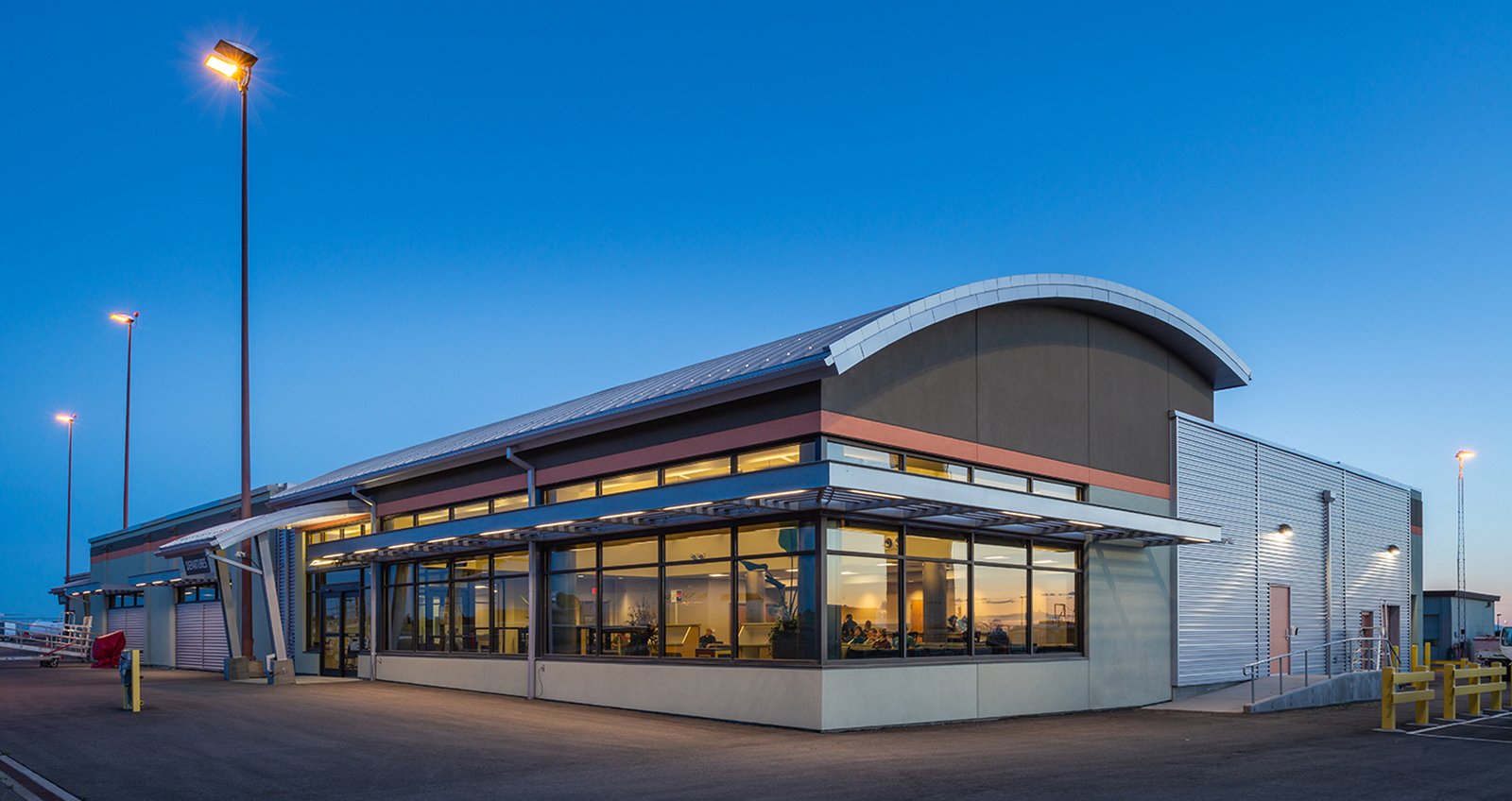
Cargo operators and hangar tenants who want to build beside a 9,400 foot runway need a contractor who treats the airfield as part of the site plan, and that is how we approach every project near Valley International Airport. The rules are different here: height limits, badging, restricted areas and a landlord who must approve what you build.
We build the pieces that surround a regional airport. That includes clear-span hangars, freight and sorting buildings, maintenance and equipment shops, truck courts and the offices that go with them. We also build for the people who depend on the field, such as freight forwarders, charter operators and the companies that service aircraft.
Airport work rewards patience and planning. Our project teams are comfortable with the schedule discipline it takes, and our estimators know where the surprises tend to hide, whether that is a height limit, a badging delay or a door that needs a deeper footing than the drawings first showed.
Most of the work we are asked about near the field falls into three groups. Aircraft hangars with a clear span and a wide door wall are the first. Cargo and freight handling buildings, with dock-high doors on one side and a truck court on the other, are the second. The third is everything that supports them: offices, maintenance bays, fuel and equipment storage, employee parking and security fencing.
A hangar is a structural problem and a door problem at once, so we coordinate the frame, the door manufacturer and the foundations from the start. See our notes on aircraft hangars for the bay widths, door types and floor loads that drive the price. Cargo space follows the logic of any distribution center, with the addition of airside access and a very different security routine.
Airport Improvement magazine reported in September 2024 that runway 35L was extended from 8,400 to 9,400 feet between December 2022 and July 2024, at an estimated $35 million split 80 percent federal airport program and 20 percent passenger facility charges. The point of the extension was cargo: carriers such as FedEx and DHL can now reach 70 percent of maximum gross takeoff weight, where in 2019 their aircraft left with only 40 percent of available load factor.
For a builder, that is a signal about demand. When freight aircraft can leave fully loaded, nearby space for sorting, staging and trucking becomes more valuable, and tenants ask about it. Cameron County lists three county airports, and this is the longest runway of the group at 9,400 feet. Owners looking at adjoining ground should ask the airport and the city what is allowed before they buy, then call us to price the improvements.
Building near an active runway means more than one office has a say. The airport owner controls leases and ground access. The city reviews building plans. Federal aviation rules govern how high a structure or a crane may reach near the approach paths, and projects that rise toward them typically need notice to the federal aviation authority before steel goes up. We ask about height and crane swing in the first meeting, not the fifth.
We also lay out haul routes, laydown areas and gate access with the airport operator before mobilizing, so trucks do not wander onto taxi areas or block emergency lanes. Our crane buildings and clear-span rigid frame buildings pages show how we sequence erection and lifts when overhead room is limited.
Workers on or near an airfield need credentials, escorts and training that an ordinary site does not. Vehicles that cross certain areas need markings and flags. Foreign object debris, the gravel and loose hardware that can damage an engine, is treated as a real hazard, so every crew on our site sweeps, covers loads and keeps the site clean. We build those rules into the site safety plan and brief every subcontractor before they start.
The airport is also a working public facility. It broke ground in April 2024 on a new 122 foot air traffic control tower with a total project cost of up to $30 million, because the existing tower, more than 50 years old, has corroding structural metal. State project records list the tower as an 8,000 square foot building with construction running into January 2027. Active projects on the field mean coordination for deliveries, noise and shared roads, and we plan for it.
Cost on an airport-adjacent site tends to come from places a normal commercial job does not have. Security and access add supervision time. Height limits can force a lower roof or a different frame. Wide-door hangars cost more per square foot than a plain shell because the door wall is a heavy structural element. Drainage has to be reviewed carefully, since standing water draws birds, a concern near runways.
We price those items separately so you can see them. On a typical hangar or cargo shell we show the frame, door, slab, utilities, site work and soft costs as their own lines, and we keep a modest allowance for coordination with the airport. If you want a simple first number, send the clear height, door width and floor load you need and we will start there.
Most airport-area projects use a few of our services together. Pre-engineered metal buildings suit hangars and freight sheds with clear spans. The trade partners for truck courts and dock aprons pour the heavy concrete where trailers turn and park. Site utilities, grading and drainage are built before the shell goes up.
Buyers in air freight and trucking can find more in our logistics and distribution page, and anyone comparing nearby land can read about the Harlingen Industrial Air Park next door and our general notes on Harlingen as a market. We would rather help you choose the right parcel than build the wrong building on a hard site.
Tell us the use, the clear height and the door width, and we will give you a first range and a list of the airport approvals your building will need.
Yes. Wide doors push the structural design, so we involve the frame engineer and the door supplier early. The door type, whether bifold, hydraulic or sliding, affects cost, opening speed and wind rating, and each has different foundation details at the sill.
Structures and temporary cranes that reach certain heights near an airport typically require notice to the federal aviation authority. The airport sponsor can tell you which surfaces apply to your parcel. We ask for that early, because a height limit can change the roof line or the way steel is lifted.
We do. Airport operators generally require badging, escorts and defined haul routes, and we build a site safety plan around them. Deliveries are scheduled to avoid operating hours where needed.
A metal shell can be erected in a few weeks once the foundation and steel are on site, but the whole schedule also includes airport review, permitting, lead time on the frame and the door, and slab curing. We will give a month by month schedule once we know the size, the door and the approvals required.
It is a reason to look, not a promise of tenants. The extension lets cargo aircraft depart more fully loaded, which can support demand for nearby freight space, but your project should work on its own numbers. We will help you test them.