
At least 12 inches of rain in four hours is what the National Weather Service estimated for the evening of March 27, 2025, when the heaviest totals of that three-day storm fell across Harlingen. The Harlingen Valley station logged 13.98 inches and the cooperative station 15.18 inches. A storm drain system sized for ordinary Valley thunderstorms cannot take that, and every owner who builds here now asks how their site would have behaved.
Stormwater work is the set of pipes, inlets, swales, ditches, culverts and detention ponds that carry rain away from a building and hold it back so it does not flood the neighbors. It is designed by a civil engineer, reviewed by the city or the drainage district, and built by crews who have to get the slopes right to within a fraction of an inch over long runs of flat ground.
We manage the installation of the underground pipe, structures and ponds where the job calls for it. This page explains how we approach drainage on commercial and institutional sites, and it pairs with our notes on mass grading, since the grade and the pipe are really one design.
The same National Weather Service summary counted more than 5,000 structures impacted across the populated Valley in the March 2025 flood, over 2,000 of them with major damage or destruction, and at least $157 million in reported property damage. Nearby counties and cities responded in the usual way, with grant-funded projects to enlarge pipes and widen ditches.
Harlingen started $700,000 of American Rescue Plan drainage work in 2024 in the Lazy Palms subdivision, Sun Country Estates and the Jacaranda Drive area, using larger storm pipes to capture runoff from 105 acres and allowing four to six months of construction at each site. In La Feria, two General Land Office grant projects worth about $2 million were building 60-inch pipes between Cooper Lane, Dodd Lane and the nearby arroyo. A private owner should read those numbers as a signal: public systems around you are being rebuilt larger, and your own site plan will be reviewed against that background.
The tolerances are the whole game. Pipe on a Valley site may fall only a few tenths of a foot over several hundred feet, and a laser that is off by half an inch can leave a low spot that holds water forever. We shoot the flow lines from survey control, check them again after bedding and check the as-built elevations before backfill, because it is far cheaper to lift a joint than to open a finished parking lot.
We also think about the order. Detention ponds and outfalls get built first so that rain on a half-finished site has somewhere to go. Inlets are protected with silt controls, pipe trenches are backfilled and compacted in lifts rather than dumped, and the grading around each structure is finished so the water finds it. Skipping any of that tends to show up as a ponded corner on the first wet day.
Inside a city, the engineer submits the plan to the city and to whatever drainage district controls the outfall. In unincorporated Cameron County, the county flood order names the County Engineer as Floodplain Administrator and adopts the Flood Insurance Study dated February 16, 2018. Texas also leaves each city free to adopt later building code editions, and Harlingen reports the 2024 International Codes in effect as of October 1, 2025, so the plan reviewer is working from current books.
A drainage district often owns the ditch or resaca your site drains to, and its permission to connect is separate from the city's. In Combes, for instance, Cameron County Drainage District 5 has been working on a roughly $7 million project that would widen a pipe under Interstate 69E, and the reported freeze of a nearly $900,000 federal grant for it in May 2025 shows how public timelines can slip. We tell owners to ask the district early what it will accept and when.
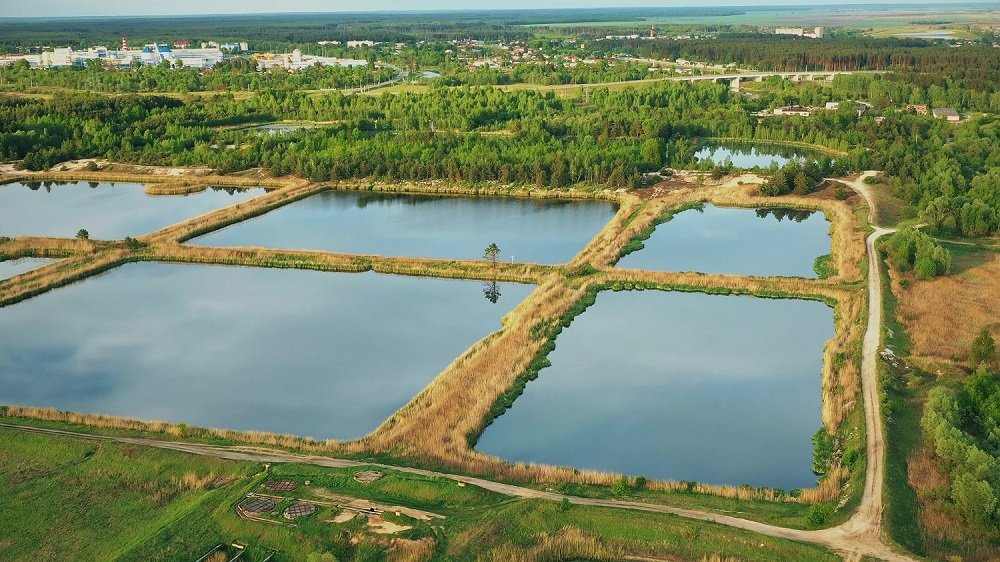
Most commercial sites in the Valley are required to hold back the extra runoff their roofs and pavement create, which means a pond. A pond takes land, so it competes with parking and building area, and a smaller pond with an outlet structure is often the better answer than a big one. Underground detention cuts the land use but costs more per cubic foot, and we price both so you can choose.
Outfalls matter just as much as ponds. If the ditch downstream is already full, a perfectly sized pond just delays the problem. Cameron County Drainage District 6 signed an agreement with La Feria in October 2025 to improve drainage citywide, starting with a ditch off Rabb Road and a $55,000 emergency generator that keeps two pumps running through power outages. That is the kind of detail we ask about before we set a pipe invert, because the downstream system decides what we are allowed to discharge. Public agencies that own their own ditches and pumps also tend to have their own standards, so a school or municipal site can have a second set of reviewers beyond the city, and we build that extra review time into the schedule.
Drainage rarely stands alone. It ties into parking lot construction through the inlets and curb lines, into foundations through the finished floor elevation, and into truck courts and dock aprons through the slopes that keep trailers level while water runs away from the doors.
Owners who manage portfolios, such as property management firms, also hire us to correct drainage on existing sites: regrade a low corner, add an inlet, replace a crushed pipe or enlarge a swale. Those jobs are smaller but they follow the same principles, and we can often finish them in a few weeks.
Send the civil drawings or just the address. We will review the pond, pipe and outfall approach and tell you what it should cost to build and what could change the number.
The roof and pavement shed water faster than open ground, and cities and drainage districts generally require you to hold the extra volume and release it slowly. The engineer sizes the pond from the storm criteria. We build it and shape it so it drains properly and can be mowed.
Yes, and it works well on tight lots or where parking space is valuable. Pipe or chamber systems cost more per cubic foot than an open pond and need inspection ports, but they can free several parking stalls. We price both options so the tradeoff is visible.
The district may limit your discharge rate or require improvements downstream, which can change the pond size or add cost. We recommend asking the district about the outfall capacity before design is finished so the numbers are not a surprise.
The pipe and structures on a typical retail or warehouse pad take a few weeks once grading is done, with detention taking longer if it is large. Weather matters, because trenches cannot be open during heavy rain. We give you a working-day range and a separate weather allowance.
Yes. We regrade low spots, replace failed pipe, add inlets and rebuild swales on occupied sites, usually in phases so your tenants keep access and parking while we work.