
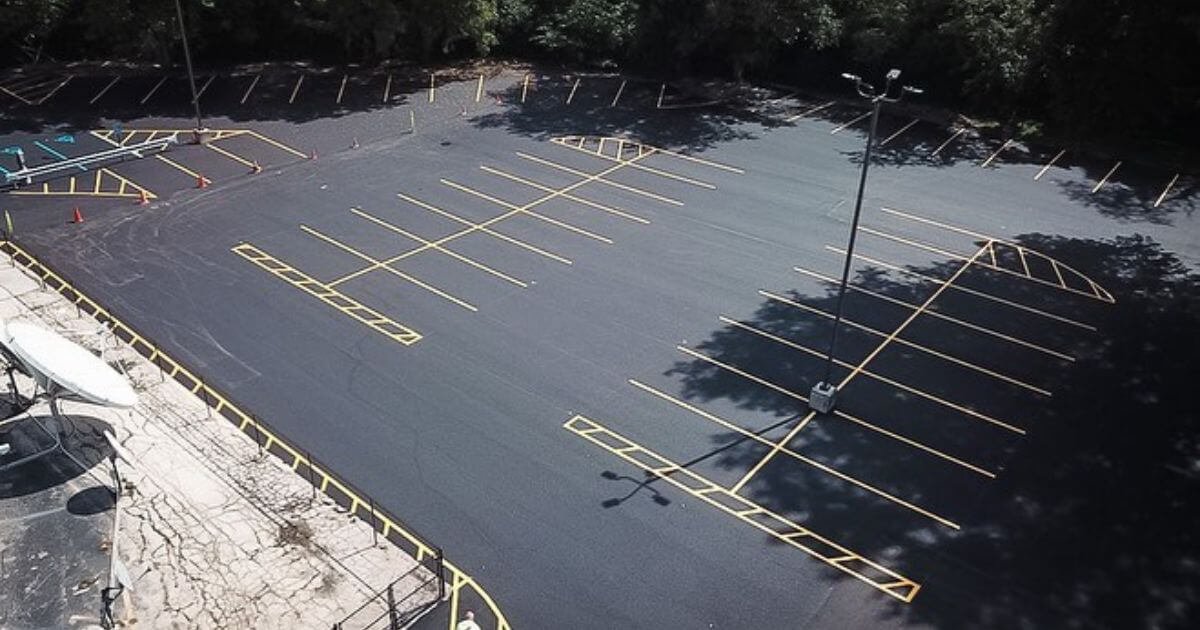
Water that stands on a parking lot for an hour after a rain is not a cosmetic problem. It soaks the base, softens the clay under it and sets up a pattern of potholes that returns every year. The Valley's flat land and heavy storms mean a lot of pavement here fails from the bottom up, long before the surface wears out, and the cure is almost always better grading and a base that matches the soil.
Parking lot construction covers the whole stack: subgrade, base, asphalt or concrete surface, curbs and gutters, inlets, striping, signage, accessible stalls and lighting conduit. On a small retail pad it is a modest scope. On a medical campus, a school or a strip center with many tenants, it can be the largest part of the contract and the part the public judges first.
We build new lots, add stalls to existing ones and rebuild failed areas, working with the civil engineer on layout and with the drainage system described in our page on stormwater and drainage. Truck-bearing areas follow a heavier recipe, which is covered in truck courts and dock aprons.
The biggest price items are the base and surface thickness, the amount of fill needed to get water moving, and the amount of curb and drainage structure. Asphalt is cheaper to place than concrete and can be opened to traffic quickly, but it needs sealing and periodic repair. Concrete costs more up front and tends to last longer where trucks turn or park. Many owners use both: asphalt for the stalls and concrete for dumpster pads, fuel islands and entrances.
Small convenience-store sites show the scale of the number. The state's project records list a 5,394 square foot 7-Eleven on the expressway in San Benito with an estimated cost of $1.2 million, registered in July 2025 for construction in 2026. On a site like that, the parking, drive aisles and drainage can be a real share of the total, and a few extra inches of base across the lot adds up. We prefer to show the owner those options in a simple alternates list, so the decision is made on money and expected life, not on habit.
Maintenance belongs in the same conversation. A new asphalt lot generally benefits from crack sealing within the first few years and a seal coat after that, and an owner who budgets a small amount each year avoids a large rebuild later. We will leave you a short maintenance note with the closeout documents, including how to keep inlets clear and where the lot is designed to hold water briefly in a heavy storm.
After clearing and rough grading we cut the subgrade to the design elevation and test it. Where the report calls for lime or cement treatment, we mix and cure it before placing base. Utilities for lighting and irrigation are trenched before the base goes in, so we do not have to cut new pavement later. Curb and gutter is formed or slip-formed, and inlets are set to the design elevations with the surrounding pavement graded to them.
The surface goes down in lifts compacted to density, and the finished asphalt is checked for thickness, smoothness and slope. At the end we stripe stalls, paint accessible symbols, set signs and bollards and check every accessible route against the drawings. Slopes for accessible parking are small and fixed, so we survey them again after paving instead of trusting that the design carried through the field.
A San Benito newspaper report in August 2025, citing Texas Comptroller data, put Rio Hondo's city revenue up nine percent over the past year, with retail, food service and some service industries growing most. That kind of growth is what fills new strip centers and pad sites, and each one needs a parking field that works for customers and delivery trucks.
Warehouse and business parks add their own parking needs. The Texas Department of Licensing and Regulation lists a two-building warehouse business park in La Feria, 31,333 square feet with offices and parking, estimated at $2.5 million. Owners of mixed office and warehouse space often forget that employee parking and truck circulation compete for the same acreage. We help them sort that out before the plans are final, which is far cheaper than shifting curbs later. Developers who ask for early pricing can also review our approach for retail chains, who often repeat a standard parking layout across many sites.
Work on a lot that stays open for business requires traffic control. We phase the work so customers always have a way in, mark closed areas clearly and keep equipment out of fire lanes. Night work is common at stores and clinics, and we light the work area properly.
Accessibility is not optional. Texas requires projects of $50,000 or more to be registered with the Texas Department of Licensing and Regulation for review under the Texas Accessibility Standards, and smaller projects must still comply. We build accessible stalls, aisles, ramps and routes to the drawings and check the slopes before the inspector arrives, which keeps the final inspection short.
We work across the eastern Valley, including Harlingen, San Benito and Rio Hondo. Each town has its own approval path and its own history of flooding. The National Weather Service reported water entering homes and flooded streets in Harlingen during Hurricane Hanna in 2020, and it said the heaviest March 2025 rain fell between Santa Rosa, Harlingen and Rio Hondo, so we treat drainage as a design item and not an afterthought.
If you are comparing sites or deciding where to put the entrance, give us a call early. A short site walk can save you from placing a drive where water naturally collects.
Share the plan, the lot size and the tenant mix. We will price the paving, curbs and drainage and show you alternates for base thickness and surface type.
Asphalt is cheaper at first and easy to patch, while concrete lasts longer and resists standing loads. Most commercial owners use asphalt for stalls and concrete where trucks, dumpsters or fuel are. We will price both on your layout.
A small retail lot may take one to three weeks after grading, depending on the size and the weather. Larger lots with curb, drainage and lighting take longer. We give a working-day estimate and a weather allowance.
Most start with water getting into the base. Clay swells, pavement flexes and the surface cracks. Good drainage, a stable base and sealed joints slow the process, and a flat lot with poor slope will fail quickly.
Projects costing $50,000 or more must be registered with the Texas Department of Licensing and Regulation for accessibility review, and smaller projects still need to comply. Your design professional usually files; we build to the approved plan.
Yes. We phase the work, keep entrances open and schedule noisy tasks for off hours. Customers should always have a clear path to the door.