
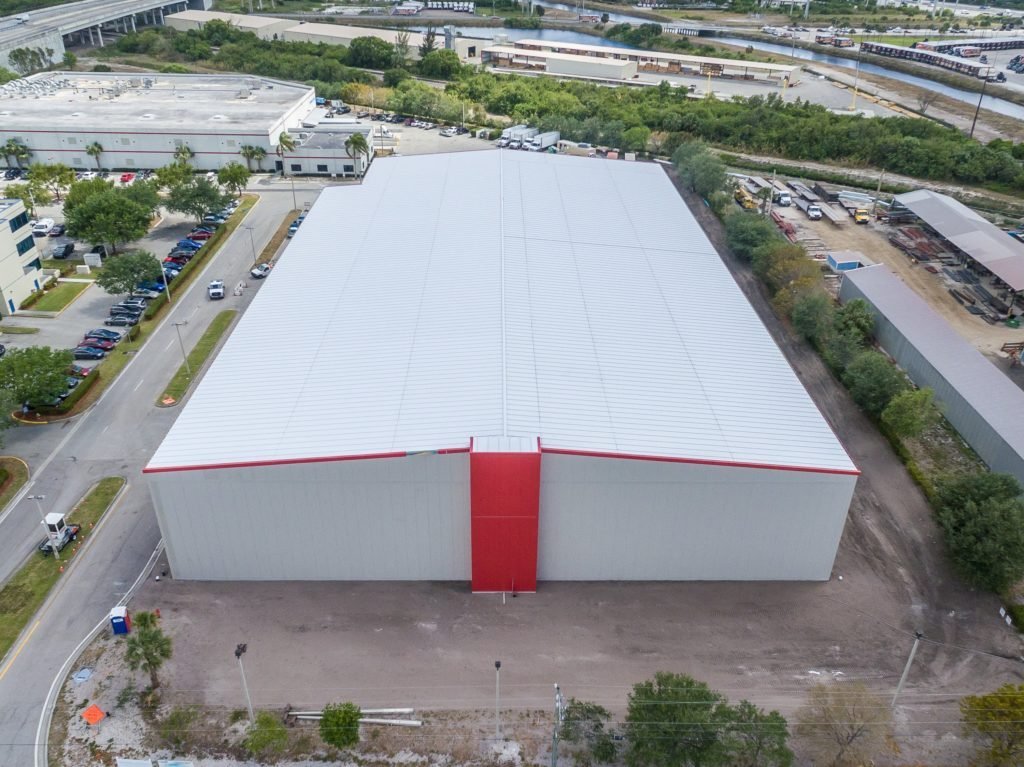
When the power goes out in La Feria, the county's drainage district has a $55,000 emergency generator waiting to keep two pumps running on a ditch off Rabb Road. That small detail says a lot about building cold storage in the Valley: this is a region where storms knock out power and water has to be moved, and a building full of frozen product cannot wait for the grid to come back.
A cold storage building keeps a controlled temperature, from a cool 35 degree produce room to a freezer at zero or below. The envelope is a thick insulated shell, the floor is built to keep the ground from freezing and heaving, and the refrigeration system runs most of the day. All of those pieces affect each other, and the whole thing needs a plan for what happens when electricity fails. A good cold building also has a plan for water, which is why stormwater and drainage design is part of our first site review.
We build coolers, freezers, ripening rooms and combined dry and cold warehouses for packers, grocers, food processors and distributors. For general storage, see our page on warehouse construction. For high-volume cross-dock operations, look at distribution centers.
The shell uses insulated metal panels or insulated tilt-wall, with a continuous vapor barrier. Any gap or tear lets warm, humid air in, forming frost and ice, which is why we pay close attention to joints, penetrations and door frames. Roofs have to be sealed and sloped to shed water, and details at the base of walls are designed to prevent condensation.
The floor is one of the most important parts. A freezer slab sits on layers of insulation and often a heating system, such as glycol tubing or electric elements, to keep the soil beneath from freezing and lifting the slab. Harlingen's clay soil is already prone to movement, so the geotechnical engineer and the refrigeration designer need to talk. We coordinate that conversation before the slab is poured, since a failed freezer floor is expensive to repair.
The design wind speed in Harlingen is 110 mph in the Texas Department of Insurance Inland II zone, and insulated panels, rooftop condensers and doors are rated for it. A refrigeration plant outside the building is exposed to storm wind and flying debris, and we fasten it down and screen it carefully. The city administers permits under the 2024 International Codes, with the 2023 National Electrical Code, effective October 1, 2025.
Refrigerants add another layer of review. Systems that use ammonia or large charges of other refrigerants face mechanical code and fire code requirements, process safety rules and sometimes federal programs. Those are the owner's and the refrigeration designer's responsibilities, but we schedule inspections and pre-commissioning with them. Accessibility review for projects of $50,000 or more also applies under the Texas Accessibility Standards.
Cold storage generally costs a lot more per square foot than dry warehouse space. The extra cost comes from insulation, vapor barriers, refrigeration equipment, electrical capacity, controls and the freezer floor. A freezer costs more than a cooler, and a blast freezer costs more than a holding freezer. We break these out in our estimates so you can decide where to spend.
Standby power is a separate decision that deserves its own number. A generator sized for the whole refrigeration load is a substantial cost; a smaller generator that carries compressors, controls and lights for priority rooms is cheaper, but you have to decide what you can afford to lose. We help owners pick based on the value of the product and the likely length of an outage. A phased approach also works: install the electrical gear and a transfer switch now with a generator pad, and buy the generator when budget allows, or rent one for emergencies. Our preconstruction estimating work puts these choices side by side.
The Port of Harlingen ships outbound cotton, grain and sugar, which shows the area's agricultural base, and growers, packers and processors across the Valley need temperature-controlled space for produce and other perishables. Our logistics and distribution clients often ask for a combination of dry and cold space, with a small freezer for frozen goods and a larger cooler for produce.
The food and beverage processing side has additional demands, including washdown finishes, drains and sanitary details, which we build in. A grocer, restaurant supplier or caterer may need only a modest cold room, and we can attach one to an existing warehouse or build a stand-alone cold building next to it.
Construction in cold buildings has its own hazards. Refrigerant lines have to be pressure tested and purged before they are charged. Workers in freezers need appropriate clothing and rest periods. Doors and floors should have alarms and emergency release hardware so nobody gets trapped, and emergency lighting is installed on its own power. We write the safety plan with the refrigeration contractor and keep it on site.
Drainage and moisture control protect the structure. Defrost water and condensation have to be drained, not allowed to freeze on the floor outside. A well-drained yard, heated door frames and properly sloped aprons prevent ice in winter and standing water in summer. Because the Harlingen area saw hurricane rainfall of 9.7 to 12.4 inches in July 2020, we also plan for storm water to stay away from doors and equipment rooms.
Tell us the product, the temperature and how much space you need, and we will work through the shell, floor and power with you.
Usually longer than a dry warehouse of the same size. Refrigeration equipment, insulated panels and electrical gear carry long lead times, and commissioning takes weeks. We set a schedule with the equipment vendors before we commit to a date.
It depends on the product. Produce, dairy and beverages usually go in coolers at about 35 to 40 degrees, while frozen foods need freezers at zero or below. Many owners build a cooler first and leave space for a freezer later. The structure, panel layout and electrical room can be planned so that a freezer bay can be added to one end without disturbing the cooler, and the slab at that end is poured with the insulation and heating provisions already in place.
If the product is valuable and cannot be moved quickly, yes. At least a partial generator for compressors, controls and alarms is common. We also recommend monitoring that texts the manager if the temperature drifts.
Sometimes. The building needs a suitable slab, enough electrical service and a structure that can carry the added load. We inspect and price before you commit.
Equipment and pads should be placed above flood level, and the site needs drainage. The National Weather Service reported nearly 19 inches of rain in the March 2025 event in the Harlingen area, so we treat elevation as a first step.