
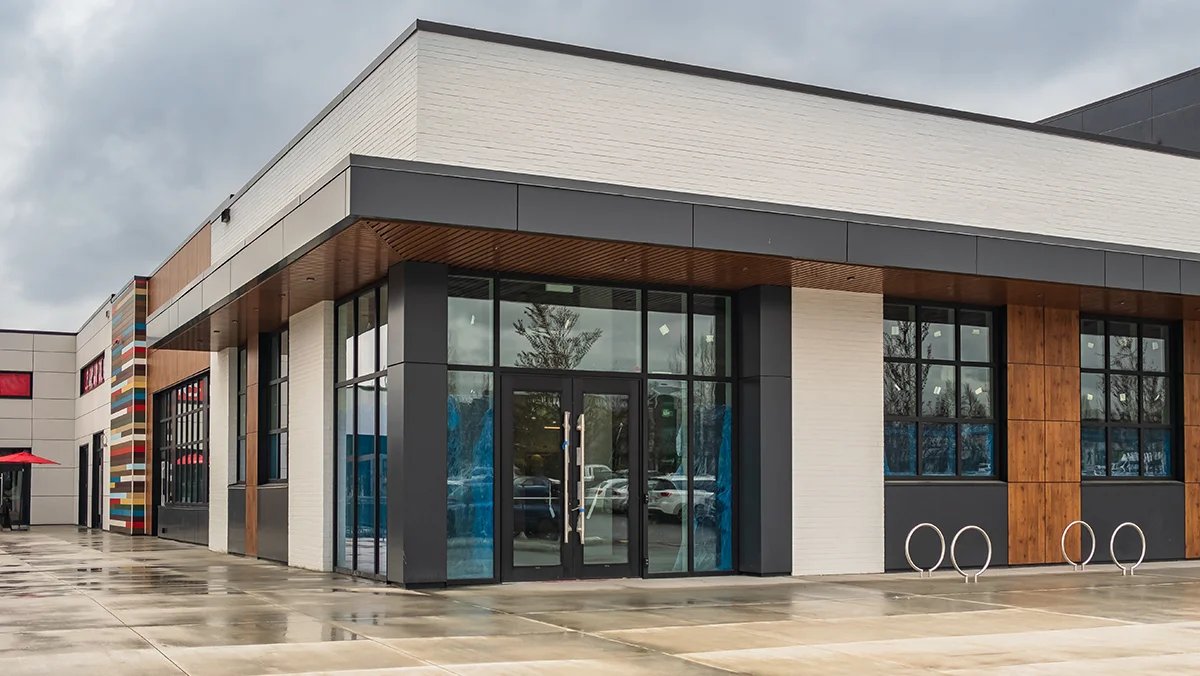
Nine miles separate Rio Hondo from San Benito, yet the Texas Department of Insurance places Rio Hondo in the Inland I wind zone at a 120 mph design gust and San Benito in Inland II at 110 mph. A retail or service company building the same prototype in both towns would need two different wind designs, and that is before the permit offices, flood rules and drainage districts get a vote.
A programmatic rollout is a series of similar buildings built in several places under one plan: a convenience-store prototype, a clinic format, a bank branch, a school classroom addition, a series of equipment shelters. The owner wants repeatable quality, a predictable budget and a schedule that does not collapse when one town's reviewer is slow. The contractor's job is to make eight sites feel like one project.
We handle rollouts across the eastern Valley, where the sites might be a few minutes or an hour apart and each town has its own habits. Our experience with tenant improvements and with standalone buildings gives us a base, and the rest comes from keeping a single playbook and updating it after every site.
Interstate 69E runs through San Benito, 6 miles from Harlingen, and the Texas Department of Transportation lists the same interstate as running about 53 miles through Willacy and Cameron counties from a junction north of Raymondville, so a crew can service several sites along one highway in a day. The state's project database lists new commercial work scattered through the area, such as a convenience store with restaurant on the expressway in San Benito and a new warehouse business park in La Feria, each worth more than a million dollars. Companies expanding in this market tend to add sites steadily rather than all at once.
That pattern suits a rollout approach. Instead of treating each lot as a new problem, we build a prototype package: standard details, preferred subcontractors and a shared procurement list. The first site absorbs the learning, and the later sites should run smoother and faster.
The playbook has five parts. First, a site survey checklist: soils, flood status, utilities, access, zoning and permit contacts. Second, a prototype drawing set with a defined list of site-adaptable items. Third, a master schedule with standard durations for each phase. Fourth, a purchasing plan that buys common materials in bulk. Fifth, a closeout template that every site uses.
After each site we hold a short review and update the playbook. What took longer than planned? Which inspection failed? Which supplier was late? Which drainage district took the longest to answer? Over a series of builds, those notes turn into real schedule savings, and the owner gets a report on what each site cost and why.
Our rollout work covers Harlingen, San Benito, La Feria, Rio Hondo, Combes and Raymondville. We know where the drainage districts differ, which towns are more likely to have a flood-prone lot and where utility connections run slowly.
La Feria, for example, has a tax increment zone with a project list for sewer, drainage and parks, and Combes has an ongoing drainage district effort around Interstate 69E. Those public projects affect timing and access, and we check them during site selection so the owner is not surprised halfway through construction.
Harlingen reports the 2024 International codes and the 2023 National Electrical Code in effect as of October 1, 2025. State law sets the 2012 International Building Code as the floor for municipal commercial codes, and each city may adopt later editions, so a prototype that passes in one town may need revisions in another. We contact each building department at the beginning, ask which edition and amendments apply and record the answer in the playbook.
Outside city limits, the county takes over. Cameron County's flood order covers unincorporated areas and requires the lowest finished floor in flood-prone areas to be 12 inches above base flood elevation or 24 inches above the highest adjacent natural grade, whichever is higher. Willacy County has its own windstorm map page at the Texas Department of Insurance, listing Raymondville in Inland II. A good rollout plan lists all of these in one table.
The goal is to keep crews moving. Site one finishes foundations while site two clears and grades, and site three waits for its permit. We stagger the starts so crews and equipment shift from site to site without long gaps, and so inspectors do not all arrive on the same day.
The weather adds variation. A heavy rain in Harlingen might not touch the lot in Raymondville, but the same system can stall every site for a week. We hold a float at the program level to absorb it, rather than at each site, so one stalled lot does not spill its delay onto the others, and we report progress weekly in a one-page dashboard. Material orders follow the same rhythm: the approach in long-lead procurement lets us release the roof units, doors and electrical gear for several sites together. Each site's closeout is also scheduled as a unit, using the steps in commissioning and closeout.
Savings come from repeated details, bulk purchasing, one set of subcontractor agreements and reduced design time. They do not come from pretending that sites are the same. Soil differences, utility distances, wind zones and drainage requirements keep each site's price slightly different, and we budget those differences openly so the owner is not surprised.
The program budget also carries a contingency pool that is shared across sites. If one lot needs extra fill, the pool covers it, and unused contingency returns to the owner at the end. We find owners prefer this to padding every site individually.
Retail chains and restaurant brands are the most obvious users of a rollout. School districts and other education institutions often have several campuses needing the same improvements. Property managers use it for a portfolio of small centers, and health systems use it for clinics.
Share your prototype, the target towns and the timeline. We will review the first sites, propose a sequence and price the first phase.
Yes. We adapt the prototype for local code, wind zone, flood rules and soils. The structure and finishes stay standard where possible, while the site work changes lot by lot.
We contact each office at the start, document the code edition and amendments, and keep a table of contacts and submittal requirements. Differences go into the playbook so the next site benefits.
They often do, because of repeated details, bulk purchasing and learning from earlier sites. The savings are real but modest, and site conditions still vary.
We shift crews to the next ready site and report the delay and its cause. Because the program has float at the portfolio level, one slow permit does not stop the whole rollout.
We send a weekly one-page dashboard showing each site's status, schedule, cost and open issues, and we hold a short call to discuss anything that needs a decision.