
Switchgear, air handlers, elevators, rooftop units and special doors rarely arrive on the day a schedule hopes they will, and they are the items that most often push an opening date. Long-lead procurement means identifying those items at the start of a project, ordering them early and managing them until they are on the loading dock, so the rest of the building is not waiting on one crate.
It sounds like paperwork, but it is really a risk decision. Ordering early means committing money before the permit is final or the drawings are complete. Ordering late means gambling that the supplier's quoted lead time will hold. We lay out those tradeoffs in plain numbers and let the owner decide, because the right answer depends on how much a delayed opening costs compared with how much a deposit at risk would.
The work spans every building type we build, from a clinic that needs a specific imaging suite to a warehouse that needs a custom dock package. It connects closely to permitting and entitlements, since many approvals depend on the equipment submittals, and to commissioning and closeout, since equipment must arrive before it can be tested.
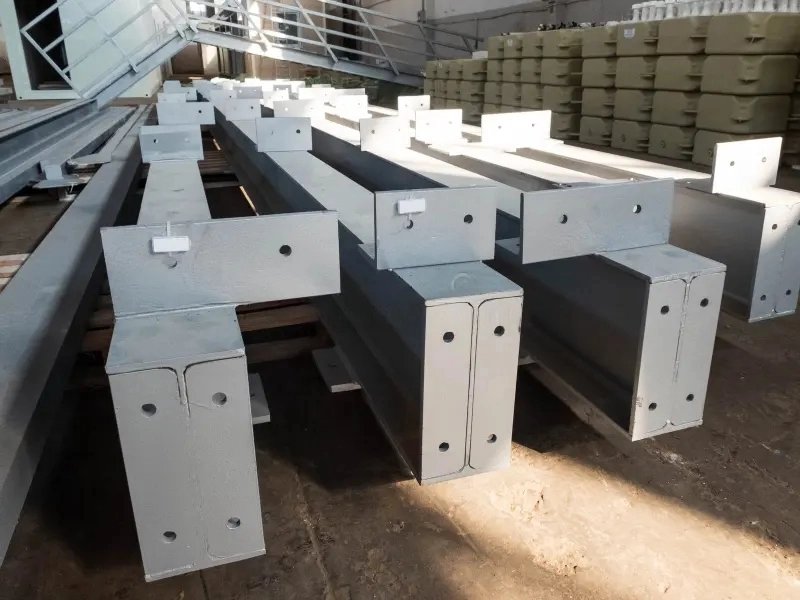
Anything with a factory production queue qualifies: main electrical gear, generators, transformers, large air handlers, chillers, boilers, elevators, structural steel, pre-engineered metal building packages, specialty glazing and custom doors. Lead times swing with the market, and a number quoted last year may not hold. We ask the suppliers for current written lead times and update our schedule when they change, instead of trusting a rule of thumb.
Hospitals show how this works at a smaller scale. The state's records list a South Tower ventilation and heat wheel project at Valley Baptist Medical Center in Harlingen, estimated at $2,200,000, to rebuild the make-up air and exhaust air handling units and enlarge the vestibule. Rebuilding large air-handling equipment in an operating hospital means the units, controls and parts must be on site and ready before the shutdown window opens, because the building cannot go without ventilation for long.
We keep a simple long-lead register from the first estimate. Each row names the item, the supplier, the quoted lead time, the date it must be released, the date it is needed on site and what happens if it is late. The register is short on small jobs, often a dozen lines, and it changes the conversation with the owner from a vague worry about delays into a list of dates with names next to them.
Every sector feels it, but some feel it harder. Healthcare systems carry the most equipment complexity and the least tolerance for downtime. Manufacturers often buy process equipment that must land before the building is finished. Retail chains care about opening dates tied to leases and seasonal sales, so a late storefront or a missing rooftop unit costs them directly.
Public owners have their own rules. A school or municipal buyer may need competitive bidding for equipment, which affects when an early purchase can be made. We work with the owner's procurement office on release packages and on whether the contractor or the owner buys directly.
Early ordering usually requires a deposit, and sometimes full payment on release. Who fronts that money and how it is protected are contract questions. We usually recommend a written early-release authorization with a defined dollar cap, a clear description of what is being bought, and a storage and insurance plan for the period between delivery and installation.
Price escalation is the other side. A price held for a limited time can be worth more than the carrying cost of the deposit. We show the owner both numbers: the escalation exposure if the order waits, and the cost of capital if it goes early. Some items, like structural steel, sit on commodity-driven price lists, so we do not promise a price we cannot hold and we flag the expiration date on each quote.
We build the procurement schedule backward from the date the item is needed in the field. If a rooftop unit must be on the roof when the roof deck is done, and the factory needs submittal approval, production and shipping time, then the submittal deadline falls weeks or months before groundbreaking. Each of those steps is tracked with an owner, a due date and a backup plan.
Submittals are where schedules usually slip. The engineer needs time to review, the supplier needs time to revise and the owner may need to approve color or finish. We handle the review cycle with a log and a weekly call. For work that spans a long period, such as the plumbing renovation at the Valley Baptist South Tower that the state lists with construction from October 2023 to October 2026, material releases are staged so that fixtures and piping arrive in step with each phase and do not sit in a corridor for months.
Specialty buildings run on long clocks. The state lists the new air traffic control tower at Valley International Airport, an 8,000 square foot building estimated at $2,500,000, with construction from May 2024 to January 2027. A project like that cannot be scheduled without knowing when its specialized systems will arrive, and even a modest commercial building benefits from the same discipline of asking the vendors early.
Ordering early only helps if the site is ready to receive the item. Foundations for tall equipment, pads for generators and housekeeping slabs all have to be built to the supplier's drawings, not to a guess. We coordinate the embeds and bolt locations as soon as the cut sheets arrive.
Building envelopes follow the same logic. A metal building package takes time to engineer and fabricate, and our team often releases that package first so the slab and the steel crew are on a matching schedule. The pre-engineered metal building page describes that sequence in more detail.
Send us the equipment list or the drawings and we will identify the likely long-lead items, collect current lead times and show how they affect the schedule.
Order as soon as the equipment is defined and the owner is willing to accept the financial risk. For many items, that is before permits are final. We help weigh the deposit against the cost of a late opening.
It depends on the written authorization. We recommend defining the dollar cap, the cancellation terms and who owns the equipment before any deposit goes out. That is a contract matter that an attorney should review.
We track lead times weekly, build alternates into the submittals where possible and tell the owner right away when a date slips. Sometimes an equivalent product or a rental solution keeps the schedule intact.
Yes. Owner-furnished equipment is common, especially for specialized machines. We coordinate delivery, receiving, storage and installation, and we put the owner's responsibilities in writing.
We use the owner's warehouse, a secured laydown area on site or the supplier's storage, depending on cost and risk. Insurance and protection from rain and heat are covered in the plan.