
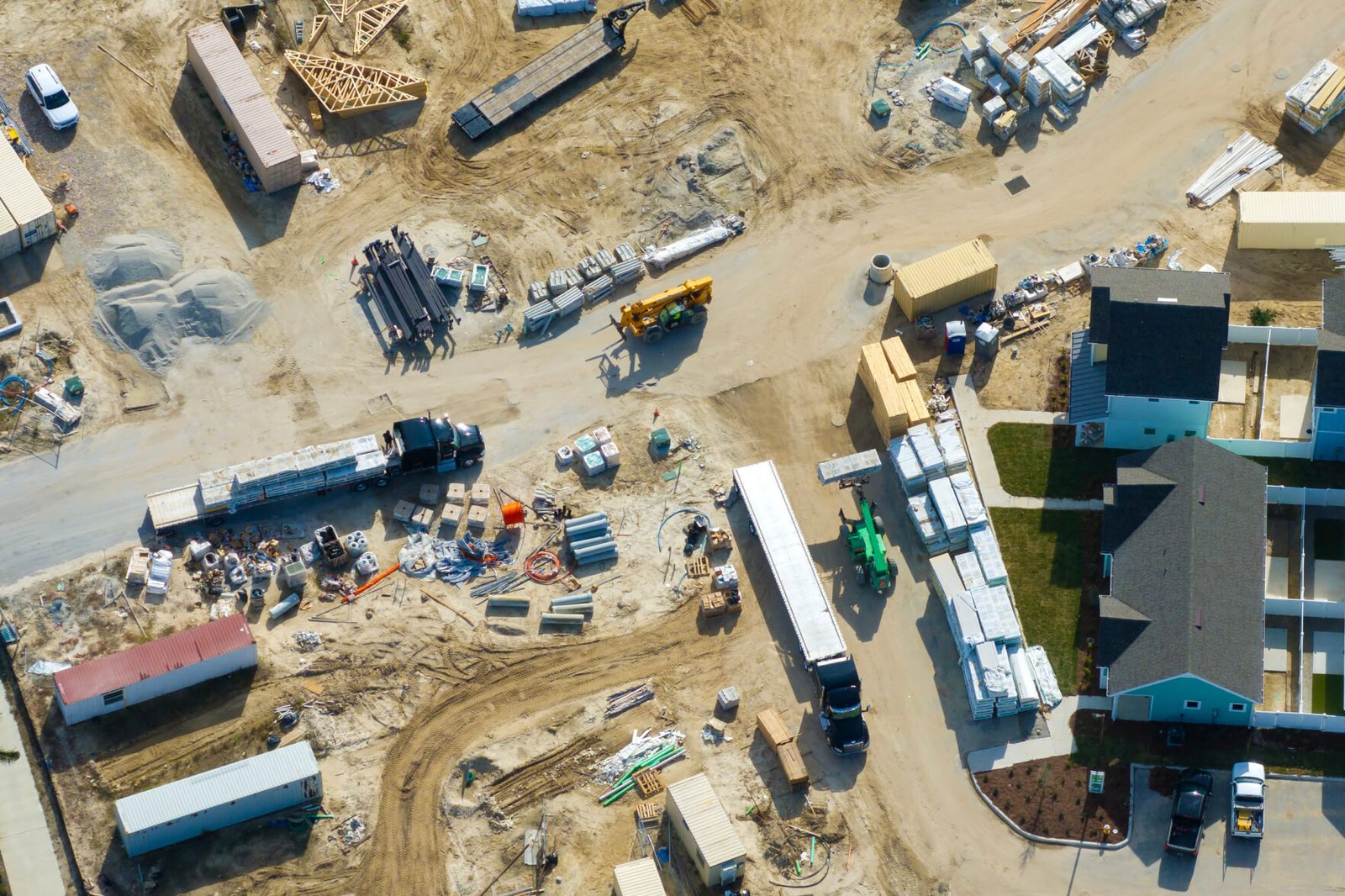
Patients keep arriving, tenants keep paying rent and school buses keep pulling up, and none of them care that a contractor is behind a wall. Phased construction on occupied sites is the discipline of building, renovating or repairing a facility while the people who use it carry on, which means every step has to be planned for dust, noise, vibration, access, life safety and utilities as well as for cost.
It is usually harder than building on a vacant lot. The work is cut into small areas, each with its own barrier, its own shutdown and its own inspection. Delays in one phase ripple into the next. And the people nearby are not contractors, so a surprise that would be routine on a vacant site can become an event for the owner.
We use phasing on clinics, hospital wings, offices, retail centers, schools and plants that cannot close. If your project is a refresh of a floor or a replacement of equipment, our pages on renovation and adaptive reuse and tenant improvements cover the scope, and this page covers how we keep the lights on while we do it.
The first step is a risk assessment with the owner's facility team. We identify who is nearby, what they are doing, and what the work could do to them: dust, fumes, noise, vibration, loss of power or water, blocked exits. For healthcare systems and other sensitive areas we use an infection control risk assessment to decide what barrier and ventilation measures are needed.
Barriers are physical and visible: solid partitions from slab to deck, negative air machines where required, sticky mats at entrances and a clearly marked path for workers. Exits and fire alarms are protected throughout, and any impairment of a fire system is coordinated with the fire marshal and the owner. Workers are briefed daily on the specific rules for the area they are in.
We start by drawing the building in zones and asking which zones can be vacated, for how long and in what order. Often the answer is to build a swing space first, move one department or tenant into it, renovate the vacated area and then repeat. That keeps the owner whole but adds cost, so we price it alongside a version with fewer phases and a longer shutdown, and the owner chooses.
Utility shutdowns are the high-risk events. We schedule them with at least a week's notice, write a step-by-step plan, have a recovery plan if something does not restart and perform them at the time the owner prefers, which is often nights or weekends. The plumbing renovation at the South Tower of Valley Baptist Medical Center in Harlingen, which the state lists as replacing water and waste piping with construction from October 2023 to October 2026, shows the scale of the work: a project that long is a series of small, carefully timed shutdowns, not one big one.
The owner's busy seasons and quiet seasons drive our schedule more than the weather does. A clinic may prefer to be closed on Fridays, a school wants noisy work in summer, a retail center wants no disruption between Thanksgiving and New Year. We map the high-risk activities, such as demolition, saw-cutting, roof tie-ins and ceiling work, to the quiet times.
We keep a three-week look-ahead on the wall of the owner's facility office and review it weekly. When something shifts, the owner hears from us before the staff notices. That small habit prevents many of the arguments that sour a project in the middle.
Existing buildings hide things: old plumbing, abandoned conduits, unlabeled panels, moisture damage and materials that need special handling. In an occupied building we limit exploratory demolition to small, controlled openings and expect to find something. A contingency line in the budget, and a clear process for approving extra work, keeps a surprise from becoming a stoppage.
Some owners share facilities with other organizations. The University of Texas Health Science Center's Harlingen Regional Academic Health Center building at 2102 Treasure Hills Boulevard, for example, includes 34,000 square feet leased to the South Texas Veterans Health Care System for the Harlingen Veterans Healthcare Center. Shared buildings with more than one tenant mean more than one set of rules, more than one security regime and more than one person to call before a utility is touched, and we plan communications accordingly.
Phased work is most common in hospitals and medical offices, but it also applies to schools, retail strips and distribution buildings where operations run all day. In a warehouse, forklift traffic and dust matter more than noise, and we protect racking, product and equipment with temporary walls and covered pathways.
Public buildings add another layer. Willacy County's Heritage and Wellness Center in Raymondville, listed by the state as three new buildings estimated at $6,000,000 with construction from February 2025 to February 2026, is the kind of campus where nearby county services keep operating while new space goes up. Neighbors are close and the public uses the grounds, so we manage access, parking and construction fencing with care.
Phasing costs more than working in an empty building, and we are honest about how much. Added items include temporary barriers and protection, night and weekend labor, repeated mobilizations, extra supervision, utility shutdown coordination and re-cleaning. On a typical occupied renovation those items can add a noticeable percentage over the same work in a vacant space, and the range grows with the sensitivity of the area.
The offset is that operations keep earning. A clinic that stays open for patients, or a store that keeps selling, usually comes out ahead even after paying for phasing. Hospital campuses like the ones around the Harlingen medical area and campuses run by education institutions are where we see this trade-off most often. We help owners compare the cost of phased work against the cost of moving out and back, which includes lost revenue, temporary leases and the risk of losing customers.
Describe your hours, your sensitive areas and the work you need. We will propose a phasing plan, price it and show how it compares with a short closure.
Yes, with proper planning. We follow infection control risk assessments, build physical barriers, manage dust and ventilation, protect exits and coordinate shutdowns with the facility team. Daily briefings help keep everyone aligned.
We schedule noisy work for quiet times, use solid barriers and negative air where needed, and clean at the end of each shift. Sticky mats and dedicated walk paths reduce tracked dust. Air quality checks happen when the owner requires them.
We schedule it in advance, write the steps, stage materials, brief the owner and have a recovery plan. Most shutdowns happen at night or on weekends, and we do not start unless the parts and crew are ready.
Usually longer than the same project in a vacant building, because work is divided into smaller areas and some tasks wait for the quiet hours. We give a phase-by-phase schedule so you can see where the time goes.
We provide notices, signs and a single contact person, and we coordinate with the owner's facility team so that staff and customers hear the same message. Surprises are rare when communication is steady.