
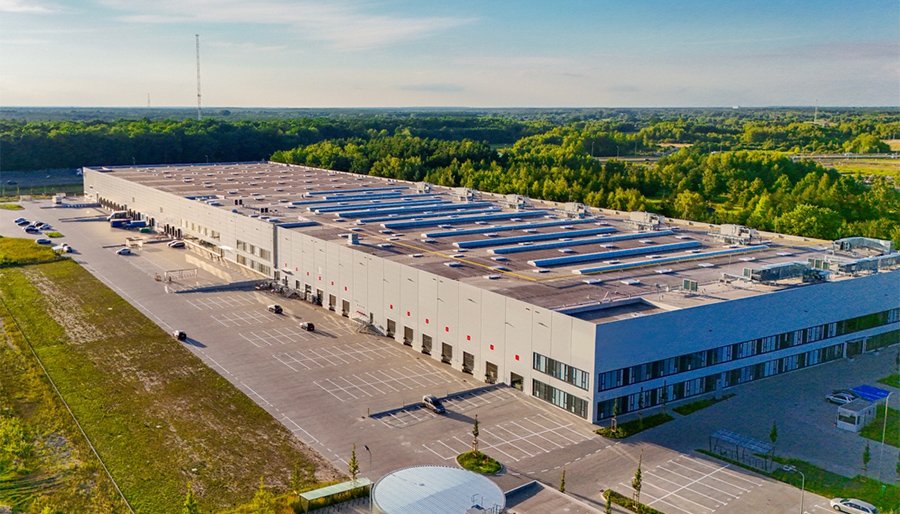
Interstate 69E leads northwest 6 miles from San Benito to Harlingen and southeast 19 miles to Brownsville, and that short stretch is the whole reason a fulfillment operator might choose this part of the Valley. A building where online orders are picked, packed and handed to a carrier needs to be close to labor, close to the parcel network and close to a highway that does not choke at the wrong hour. The eastern Valley has all three within a few minutes of each other.
A fulfillment center differs from a bulk distribution building in the details. Racking is shorter and denser, there are mezzanine pick modules and pack stations, conveyors and sortation equipment run through the building, and the electrical and data load per square foot is higher. Dock doors face two jobs: inbound pallets and outbound parcel trailers.
We plan these buildings with the operator, from site selection to slab and power. If your operation is heavier on pallets, our distribution center page applies. For a tighter, truck-to-truck flow, see the cross-dock page.
Valley International Airport's runway 35L now runs 9,400 feet, after an extension that finished in July 2024. Airport Improvement reported that the longer runway lets cargo carriers load aircraft to 70 percent of maximum gross takeoff weight, where in 2019 they had been leaving with about 40 percent. That is a boost for any shipper that uses air cargo for time-sensitive parcels, and it puts land near the airport in a different category from farm lots.
The Harlingen Economic Development Corporation lists the 479-acre Aerotropolis at FM 509 and FM 1595 with an 82-acre contiguous parcel and highway access via FM 509. Together with the Roosevelt industrial park near Interstate 69E, the area gives an operator a choice of sites. We help compare them by haul time, utility readiness and drainage. Some operators prefer a lot in San Benito, which puts the building on the same interstate between Harlingen and Brownsville with a different labor pool and often a lower land price. The trade is distance from the airport, so we run the truck time to the field and to the main parcel hubs for each candidate before the owner commits to a contract on land.
We start with the order profile: how many lines per order, units per line, peak days and return rates. Those numbers decide whether the building needs a mezzanine, a conveyor spine or simple cart picking, and they shape bay spacing and column grid. Columns in a pick module are expensive, so we ask where conveyors and racks will go before the grid is final.
The building is also designed for change. Fulfillment operations change their layout often, so we leave extra electrical capacity, spare conduit and floor that can take heavier equipment later. Floors are flat and level enough for automated equipment if you move to it. Our fulfillment and logistics center construction page lists the full service.
Harlingen enforces the 2024 International Building Code and fire code, effective October 1, 2025. Fulfillment centers store a mix of goods, including plastics and aerosols that raise the sprinkler design, so commodity classification is a first-week conversation. Mezzanines add structure, egress and fire protection to the permit set.
The Texas Department of Insurance wind map places Harlingen and San Benito in the Inland II zone at a 110 mph gust, so the building frame, roof and large dock doors are designed to that load. San Benito also appears on the Resaca de los Fresnos, a waterway about 400 feet wide, so drainage and setbacks are worth a check on lots near it.
A fulfillment building is a power user. Lighting, conveyors, battery chargers, dock equipment, air conditioning for packing areas and IT draw more per square foot than a bulk warehouse. We ask for a load estimate and begin the utility request early. A large service may require a new transformer and, in some cases, a new feeder from the substation.
The slab matters just as much. Racks on a clay subgrade need a floor that does not crack under point loads. The Harlingen soil series is 60 to 75 percent clay with deep seasonal cracks, so the base is treated and compacted, and we thicken the slab where racks and conveyors land. See commercial concrete floors for how we do it.
Fulfillment operators usually have a date they cannot miss: the start of the busy season. We schedule backward from that date. The long items are the permit, the electrical service, racking and conveyor delivery and the fire protection approval. The building can often be dried-in in a few months, but the systems determine the opening.
When the date cannot move, we suggest phases. A first phase might be the shell, slab, dock and office, with a mezzanine and extra conveyors added later. The Harlingen EDC's Roosevelt Road park, which in March 2026 was moving from planning to roads and utilities, is a reminder that site readiness is part of the schedule. Our design and build contract shortens that stretch.
Compared with plain storage, a fulfillment building spends more on electrical, mezzanines, fire protection, climate control in pack areas and flexible data cabling. The shell itself is a smaller share of the total. Operators often pay for the conveyor and sorting equipment separately, and we coordinate installation with the building schedule.
The best savings come from clarity. If the operator can state the lines, the volumes and the growth plan, we can size the building and the utility service properly and avoid change orders. Many of the logistics operators we meet start smaller than they will end up, so we plan the site to grow.
Tell us your lines per order, peak volumes and growth plan. We will outline the building, the power service and the schedule that fit your operation.
Lower land cost, direct highway access, an airport with a 9,400-foot runway and nearby rail make a good package for regional fulfillment. Labor availability and incentives should be checked with the city and the economic development corporation.
More than a plain warehouse. We ask for your equipment list and shift pattern, then work with the engineer and the utility on a service size.
If your orders are small items and many lines, it can double pick area on the same footprint. We design the structure and fire protection so it can be added later.
Electrical service and equipment delivery. Both can run longer than the shell. We put them on the critical path from the start.