
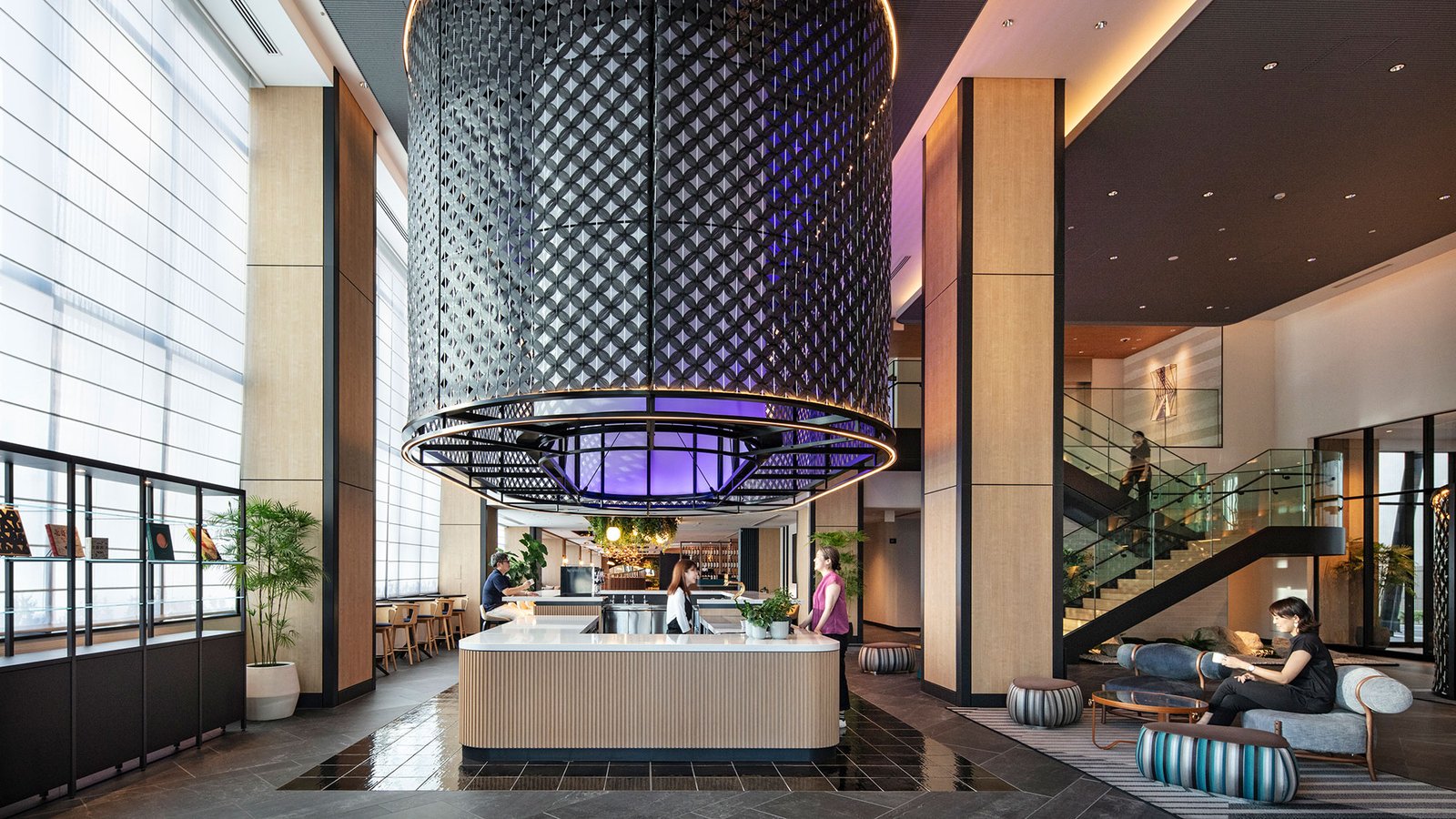
A planned 60 to 80 room hotel sits at the edge of a lake in Combes, and the lake is really a retention pond owned by a county drainage district. That one detail says a lot about hotel building in the eastern Valley. The water is part of the pitch to guests and also part of the stormwater system, so the building, the pond and the drainage district all have to agree before a footing is poured.
Hotels here serve a few different guest groups. Business travelers arrive at Valley International Airport, families and patients visit the hospitals in Harlingen, and drivers stop along Interstate 69E and Interstate 2. A limited-service hotel of sixty to eighty rooms fits that market well, with a lobby, breakfast room, small meeting space and a pool. We build to a franchise brand's standards or to an independent owner's design.
We lay out what we know about site, wind, drainage, schedule and cost below, in the order owners usually ask about them. Our hospitality hotel construction page has the service view.
The Combes lake is useful as a caution. A retention pond is designed to rise and fall with storms, so it is not a fixed shoreline like a natural lake. Buildings near it need finished floors above the design high water, landscaping that tolerates wet and dry cycles and a clear arrangement with the drainage district about maintenance and access. We read those agreements before drawing a site plan.
Hotels also add their own water. A pool, laundry, kitchen and sixty or more bathrooms generate large sewer flows, and some small-town systems are near their limits. We confirm sewer and water capacity early, because an undersized line can add a long extension or a lift station to a project that was priced without one, and a pool fill and backwash adds a large one-time demand. In Harlingen soil that is 60 to 75 percent clay, the pool shell needs careful design too, since expansive soil can crack a pool deck or tilt a retaining edge if drainage is poor.
The Texas Department of Insurance states that beginning April 1, 2026, windstorm certificate applications must be certified under the 2024 International Residential Code or the 2024 International Building Code. Harlingen already enforces the 2024 International Building Code and the 2023 National Electrical Code, as of October 1, 2025. For a hotel, that alignment is helpful: the design team works to one edition from permit to insurance.
Wind speed varies within a few miles. Harlingen, San Benito and Combes are in the 110 mph Inland II zone, and Rio Hondo is in the 120 mph Inland I zone. During Hurricane Hanna in July 2020, a peak gust of 63 mph was recorded in Harlingen with flooded streets. Guests remember a roof leak or a flooded lobby, so we are careful with the roof edge, window assemblies and entrance grade.
The building is not the whole timeline. A franchise brand will approve the site and plans, the city will review them, and the lender will want a final budget before the first draw. Those steps often take months. Once construction begins, a wood or light-gauge steel frame hotel of two to four stories typically moves quickly because the room layout repeats, and crews can work floor by floor.
The slow parts are the items ordered from far away: elevators, rooftop units, guest room furniture, fire alarm panels and kitchen equipment. We order these as soon as the design is firm. We also build a sample room early, so the owner and the brand can approve finishes before they are repeated sixty times.
Valley International Airport is the area's main passenger and cargo airfield. It extended runway 35L from 8,400 to 9,400 feet between December 2022 and July 2024 and broke ground in April 2024 on a new 122-foot air traffic control tower, with completion expected in 2026. Investments of that size suggest a long-term plan for the field, and a hotel within a short drive of it benefits from crews, passengers and cargo staff.
Harlingen also meets two major routes. U.S. 77 and U.S. 83, designated I-69E and I-2, cross here. Beyond that, families visiting the city's hospitals (see our hospital building page) create steady weekday demand, which tends to smooth out the seasonal swings that tourist-only hotels feel. An extended-stay layout with kitchenettes suits those guests, and it costs more per room than a standard plan because of the added plumbing, cabinetry and appliance circuits. Our Valley International Airport page covers the airport area, and our Harlingen page covers the city's other corridors.
Hospitality groups range from a local family with one limited-service hotel to a regional operator planning several. The first wants a building that is easy to run with a small staff. The second wants a design that can be repeated site to site. We help with both, and our programmatic multi-site rollouts experience applies when an owner plans more than one property.
Commercial real estate developers also build hotels as part of larger projects, such as a retail and housing center with a hotel parcel. In that case, the hotel is often built last, and we plan the shared utilities and drainage so that parcel stays ready.
Hotel owners think in cost per key, meaning per room. We start there. A shell with a simple plan has a base cost per room, and then we add the lobby, pool, meeting space and exterior details. We give you a range with options so you can see what each upgrade does to the cost per key.
We also stay honest about operating cost. Cheap windows, thin roofing and low-end air conditioners make a lower construction price but cost more over time, especially in a hot, humid climate. We explain those trade-offs plainly and let you choose.
Share the parcel, the brand and the room count, and we will outline cost per key and a schedule. If your project is part of a larger center, see our multifamily and mixed-use page.
Sixty to eighty rooms is a typical limited-service size, and it matches the planned Combes hotel. Smaller properties can work on a quiet corridor, but many brands set minimums. We run the numbers on a base plan and a version with room for expansion.
Yes, if the drainage district agrees and the building is designed for the pond's high-water level. The Combes lake is an example. We review the district's easement and maintenance rules before design.
Harlingen, San Benito and Combes are in the 110 mph zone, and Rio Hondo is in the 120 mph zone. The engineer of record chooses the final criteria. The insurance department's windstorm certification now refers to the 2024 codes.
Design, brand approval and permits take months. Construction of a two-to-four-story hotel typically takes the better part of a year after that, depending on weather and equipment deliveries.
Late brand changes, unforeseen soil work and slow decisions on finishes. We lock the scope early and keep allowances realistic.
Yes. We read the brand's prototype, work with the design team and build a sample room for approval before repeating it.